
ADHD Standing Desk Benefits: Focus & Productivity Help
Dickson LamStanding desks can help some people with attention deficit hyperactivity disorder (ADHD) focus, because they let you move, shift your weight and change position without stopping work. The research on movement and ADHD is promising but still small, so a standing desk works best as one tool alongside medical care, routines and breaks, not as a treatment on its own.
At effydesk, we design workspaces that make it easy to change position through the day. Our range of ergonomic sit-stand desks gives adults and students an alternative to sitting still for hours. Knowing what ergonomics is helps explain why an adjustable workspace suits many neurodivergent people. This guide covers what the research says, which desk features matter, and what to keep in mind.
What Is ADHD and Why Does Sitting Make It Harder?
ADHD is a neurodevelopmental condition that affects attention, impulse control and activity levels in children and adults. Long stretches of sitting still at a desk work against the restlessness many people with ADHD feel, which makes focus harder.
ADHD affects people of all ages. In the workplace it can show up as trouble starting tasks, drifting attention in long meetings and a strong urge to get up and move. A traditional office setup, built around hours in one chair, often makes those challenges more visible.
ADHD is linked to differences in how the brain uses dopamine, a chemical messenger involved in motivation and attention. Medication and therapy are the main treatments. Workplace experts also point to the environment, including seating arrangements and the freedom to move, as part of a supportive setup.
Can Standing Desks Help With ADHD?
Standing desks can help with ADHD by allowing movement while you work, and small studies link movement to better focus and working memory in people with ADHD. Results vary from person to person, and larger studies are still needed.
A 2015 study by Sarver and colleagues in the Journal of Abnormal Child Psychology found that children with ADHD performed better on working memory tasks when they were allowed to move more. Movement seemed to help them stay alert rather than distract them.
Research on standing desks in schools points the same way. A 2016 pilot study by Mehta, Shortz and Benden at Texas A&M found that high school students who used stand-biased desks for several months improved on tests of executive function, the mental skills behind planning, focus and working memory. That study did not focus on ADHD, so it suggests rather than proves a benefit.
In short, a standing desk will not treat ADHD, but it removes one barrier. It lets the body move in a way that many people with ADHD already need.
What Are the Benefits of a Sit-Stand Desk for ADHD?
The main benefits of a sit-stand desk for ADHD are better blood flow to the brain, easier focus through movement, steadier energy, support for sensory needs and a built-in routine. They come from changing position, not from standing all day.
Standing desks offer benefits to most users. The ones below matter most for children and adults with ADHD.
Better Blood Flow to the Brain
Sitting for long periods can reduce blood flow to the brain. A 2018 study by Carter and colleagues in the Journal of Applied Physiology found that four hours of uninterrupted sitting lowered blood flow to the brain, while short walking breaks every 30 minutes prevented the drop.
For people with ADHD, regular standing breaks work like a reset. They wake up different muscles and get blood moving through the whole body, which helps you feel more alert when you return to the task.
Easier Focus Through Movement
Switching between sitting and standing breaks up long, still periods, which helps anyone who struggles with restlessness. For many people with ADHD, a little movement makes it easier to stay with a task than forcing the body to stay still.
Small movements count. Shifting your weight, stepping in place or changing your stance gives the restless part of the brain something to do, so the focused part can keep working. For more ideas, see our guide on the best ways to stay focused when working from home.
Changing position also relieves the stiffness that builds up after long stretches in a chair. Studies on whether standing desks improve productivity show mixed but generally positive results across different kinds of work.
More Energy Through the Day
Hours of sitting leave most people tired and sluggish, and for people with ADHD the afternoon slump can make symptoms harder to manage. Standing for part of the day helps keep energy steadier.
A sit-stand desk makes movement the default. Instead of waiting for a break to get up, you can raise the desk when you feel your attention fading and lower it again when you need to settle. That simple option helps many people finish tasks that would otherwise stall. For more on staying well at work, read our tips on tackling work burnout and workplace wellness.
Support for Sensory Needs
Many people with ADHD process sensory input differently, so background noise, light and movement around them can feel louder and more distracting.
Standing gives the body a quiet outlet. Shifting weight from foot to foot and feeling the floor underfoot can have a calming, grounding effect for some people, which makes it easier to filter out distractions and settle into work.
A Built-In Routine
A standing desk adds structure to the day. Raising the desk can signal the start of a focus block, and lowering it can mark a break, which helps people with ADHD move between tasks with less friction.
That rhythm is useful when attention starts to dip. The act of changing position works as a cue to refocus. Paired with a timer or a task list, it creates the kind of predictable routine that many people with ADHD find helpful.
Which Standing Desk Features Matter Most for ADHD?
The standing desk features that matter most for ADHD are quick, quiet height changes, memory presets that remove setup friction, a tidy cable tray that cuts visual clutter, and a wide height range that fits both sitting and standing.
The fewer steps it takes to change position, the more often you will do it. A desk that needs cranking or fiddling with buttons tends to stay at one height. To set it up well, follow our guide on how to use a standing desk properly.
| Feature | Why it helps with ADHD | On effydesk electric desks |
| Memory presets | One touch moves the desk to your sitting or standing height, so switching takes no planning | 4 memory presets |
| Lifting speed | Fast changes keep you in the flow of the task | 35 mm/s on the Nimble, Terra, Wildwood and Grove |
| Quiet motors | A loud motor is one more distraction for you and anyone nearby | Under 45 dB |
| Cable management | Fewer loose cables means less visual clutter on and under the desk | Cable management tray included |
| Height range | Fits a comfortable sitting and standing height for most adults and teens | 23" to 50" |
| Anti-collision | Stops the desk if it meets an obstacle, which matters with kids around | Gyroscope anti-collision |
Some standing desks add extras such as whiteboard surfaces for quick notes or built-in storage. Those can help with organization, but the basics in the table above do more for daily use.

Think about your height, your space and your budget too. The Nimble Standing Desk starts at $715 CAD with dual motors and a 310 lb capacity, and every effydesk standing desk comes with a 20-year warranty on the frame, motors and electronics.
Do Standing Desks Help Children With ADHD in the Classroom?
Standing desks can help children with ADHD in the classroom by giving them a way to move without leaving their seat or disrupting others. School studies show better engagement with stand-biased desks, though few focus on ADHD alone.
Offering standing desks as an option, rather than a rule, gives students the freedom to stand, shift and move when they need to. Teachers often find it easier to manage restlessness when movement is allowed at the desk instead of treated as misbehaviour.
Bringing standing desks into a classroom takes planning. Cost, space and each student's needs all matter. Current research supports better focus and engagement, but more work is needed to settle best practices for schools.
Can Standing Desks Help With Other Neurodiverse Conditions?
Standing desks may also help people with other neurodiverse conditions, such as autism spectrum disorder, dyslexia and anxiety, by offering a way to move and self-regulate while working. Research in these groups is early and still limited.
For many people, the freedom to stand and move supports focus and the executive functions behind planning and organizing. Those skills are often a challenge across neurodiverse conditions.
Larger studies are still needed to measure the effect across different groups. In the meantime, understanding how office furniture affects workplace productivity is a good starting point for building a supportive workspace.
What Should You Keep in Mind When Using a Standing Desk for ADHD?
A standing desk for ADHD works best as part of a wider plan that includes medical care, structured routines, regular breaks and good organization. Results vary by person, so treat the first few weeks as a test and adjust.
Combine the desk with habits that support focus: a set start time, short timed work blocks, planned breaks and a clear task list. For children, parents and teachers play a big part in making those routines stick at home and at school.
Some people notice a clear change in focus within days. Others notice little difference. Comfort, personal preference and the type of work all play a role. Standing all day is not the goal either, so alternate positions and pair the desk with a supportive chair. Here is why every standing desk needs a good ergonomic chair.
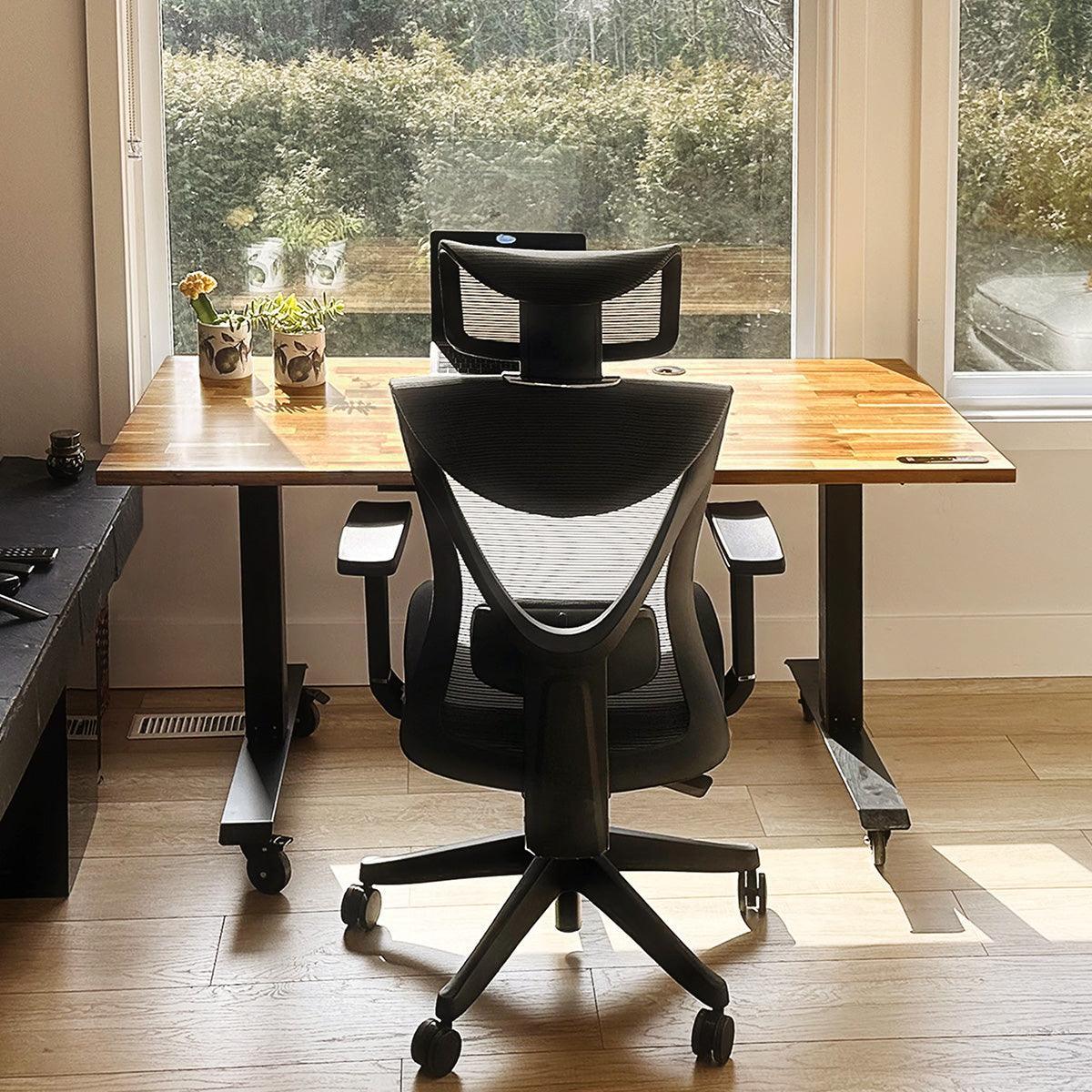
If you want to talk through how standing desks, ergonomic office chairs and other workspace changes could help with ADHD, our team is happy to help. For people working from home, these remote work tips pair well with an adjustable desk.
Frequently Asked Questions
Is standing or sitting better for ADHD?
Neither position is better on its own. What helps most people with ADHD is the chance to switch between them and move during the day. A sit-stand desk makes that switch quick, so you can stand when restlessness builds and sit when you need to settle.
How long should someone with ADHD stand at a desk?
There is no fixed rule. Start with short standing blocks of 15 to 30 minutes a few times a day and add more as it feels comfortable. Listen to your body: standing for hours without a break brings its own aches, so alternating matters more than total standing time.
Are standing desks good for kids with ADHD?
Many children with ADHD do well with the option to stand and move while they work, and school studies show better engagement with stand-biased desks. Set the desk so the child's elbows rest at about 90 degrees, and make standing a choice rather than a requirement.
What else can help with focus at a desk?
Active seating can help people who like to move while seated. The Bohdi Ergonomic Stool ($200) is an armless wobble stool that lets you rock and shift while you sit. Noise-cancelling headphones, a clear desk and timed work blocks also help many people with ADHD.
Do I still need a chair with a standing desk?
Yes. Most people spend part of the day sitting even with a standing desk, and a supportive chair keeps those hours comfortable. Choose one with adjustable seat height and lumbar support so it fits the desk at its sitting height.
The Bottom Line
Standing desks give people with ADHD a simple way to move, reset and stay engaged without leaving their work. The research is early, but it supports what many people with ADHD already know: movement helps them focus.
Used alongside medical care, routines and breaks, a sit-stand desk is a practical change for home offices, workplaces and classrooms. Results vary, so try it, adjust the routine and keep what works for you.