What to Look for When Buying an Ergonomic Office Chair
Dickson LamWhen buying an ergonomic office chair, look for seven features: a breathable mesh back, built-in lumbar support, adjustable armrests, a recline that locks, an adjustable headrest, smooth casters, and a seat height that fits your legs. A chair with these features supports good posture and keeps you comfortable through a full workday.
At effydesk, the Grin ($330), Kai ($350) and Aery ($450) Ergonomic Chairs cover these basics, and the Kai and Aery add an adjustable headrest. Every effydesk chair comes with a 2-year warranty and a 100-day trial. Here's what each feature does and how to check it before you buy.
Why Choose a Chair With Breathable Materials?

A breathable mesh backrest lets air flow through the chair, so you stay cooler and more comfortable during long work sessions than you would against a solid foam back. This matters more the longer you spend at your desk.
Look for a chair with lumbar support that has ample padding in the seat cushion. The seat should be firm enough to keep its shape over time but soft enough to stay comfortable. Our chairs feature breathable and temperature-neutral engineered mesh that moves with your body. This mesh adapts to your natural movements while supporting your spine's natural balance.
Why Do Adjustable Armrests Matter?
Adjustable armrests matter because fixed armrests set at the wrong height or width push your shoulders up or out, which strains your shoulders and wrists over time.
If armrests are too high, too low, or not the right width for your body, you might develop shoulder pain or carpal tunnel syndrome over time.
The Grin, Kai and Aery Ergonomic Chairs all have 4D armrests that move up and down, slide forward and back, shift side to side, and rotate. This lets you find the right position for your arms and shoulders and keeps your wrists aligned while you type. Petite or tall, you can set the armrests to fit your frame.
Should an Office Chair Recline and Lock in Place?
An ergonomic office chair should recline and lock in place, because leaning back during the day takes pressure off your spine without the backrest drifting under your weight.
Many standard office chairs either don't recline or tip back too easily. The Grin and Aery chairs use the EFFY Sync-Tilt mechanism, which lets you set your recline and seat height, then lock the backrest in place to avoid unwanted movement. You get ergonomic alignment without readjusting all day.
The ability to switch positions throughout your workday fights mass burnout and helps keep your energy levels up through the afternoon.
How Should a Chair Back Support Your Spine?
An ergonomic chair back should follow the natural S-curve of your spine, with lumbar support that fills the gap at your lower back so you don't slump forward.
Our chairs are designed with built-in lumbar support that curves inward at your lower back. This supports your spinal discs and helps prevent the slumping that leads to back pain. The backrest leans back slightly toward the upper section to create a natural seating position that works with your body rather than against it.
The result is a chair that moves with you while still giving your back support during long sessions at a desk job.
Why Do Chair Casters Matter at a Standing Desk?
Smooth casters matter at a standing desk because they let you roll your chair out of the way in one motion when you switch from sitting to standing.
Whether you already have one of our adjustable desks or are thinking about getting one, your chair should move easily. Every effydesk ergonomic chair has a base with five casters for smooth, multi-directional movement, which makes it easy to adjust your workspace throughout the day.
The casters are designed to roll smoothly on most floor surfaces. This simple feature makes a big difference in how easily you can transition between sitting and standing at a standing desk.
Do You Need an Adjustable Headrest?
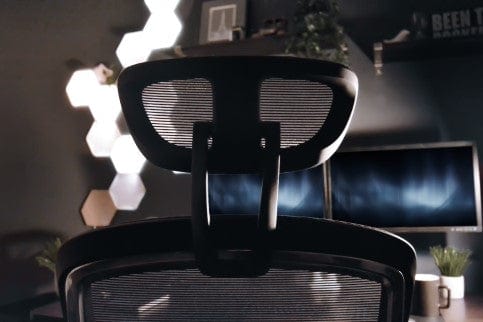 Many office seats don't include support for your head and neck. After working for a while, you might notice your neck muscles getting stiff and sore.
You need an adjustable headrest if you lean back often or get neck stiffness, because a headrest holds the weight of your head when you recline.
A good headrest adjusts to fit your height. The Kai and Aery Ergonomic Chairs include an adjustable headrest that tilts to support your head in different positions, which reduces strain on your upper back and neck. The Grin Ergonomic Chair has no headrest, so it suits people who mostly sit upright.
A headrest is especially helpful during tasks that require concentration, as it allows you to sit back occasionally without losing the alignment of your spine.
How Do You Find the Right Seat Height?
The right seat height lets your feet rest flat on the floor with your knees at about a 90-degree angle, which usually matches the distance from the floor to the back of your knee.
First, measure the distance from the floor to the back of your knee while seated, with someone else holding the tape for you. Then compare that number with the chair's seat height range: the Grin adjusts from 17" to 20.8", the Aery from 18" to 21", the Kai from 18.3" to 21.6", and the Celini from 19.9" to 23.6".
Our chairs use a gas lift, so height adjustment is quick. You shouldn't have to struggle to raise or lower your chair. One lever adjusts the seat height so you can find your position in seconds.
Frequently Asked Questions
How long do ergonomic chairs typically last?
A quality ergonomic chair should last 7 to 10 years with normal use. effydesk chairs come with a 2-year warranty and a 100-day trial, so you can test the fit at home before you commit.
Should I buy an armless ergonomic chair?
Armless chairs like our Aery Ergonomic Armless Chair work well for people who prefer freedom of movement or have limited space. They're a good solution for people who frequently switch positions or use a treadmill desk.
How do I clean and maintain my ergonomic office chair?
For fabric cleaning, use a mild soap solution and soft brush attachment on your vacuum. For stubborn stains, try an upholstery cleaner and dab with an absorbent cloth, testing in an inconspicuous area first.
Can ergonomic chairs help with existing back problems?
Ergonomic chairs support good posture and can reduce discomfort, but they're not a medical solution for serious back issues. Many people find sitting more comfortable in a well-fitted chair. See a doctor for persistent pain.
Invest in Your Comfort and Health
Choosing the right ergonomic office chair is an investment in your health, comfort, and productivity. With features like adjustable armrests, breathable mesh, and customizable settings, our chairs help create a workspace where work doesn't feel like work.
Your chair plays a key role in fighting unhealthy habits like poor posture and extended sitting. By supporting your body properly, an ergonomic chair from effydesk can help bring a brighter outlook to your work life.
Ready to upgrade your workspace? Browse our collection of ergonomic chairs today or contact our customer service team with questions. We're happy to help you find the chair that suits your specific needs.
For more tips on creating a healthier workspace, check out our guide on working with back pain or learn about complementary products like our Desk Shelf that can further improve your setup.